
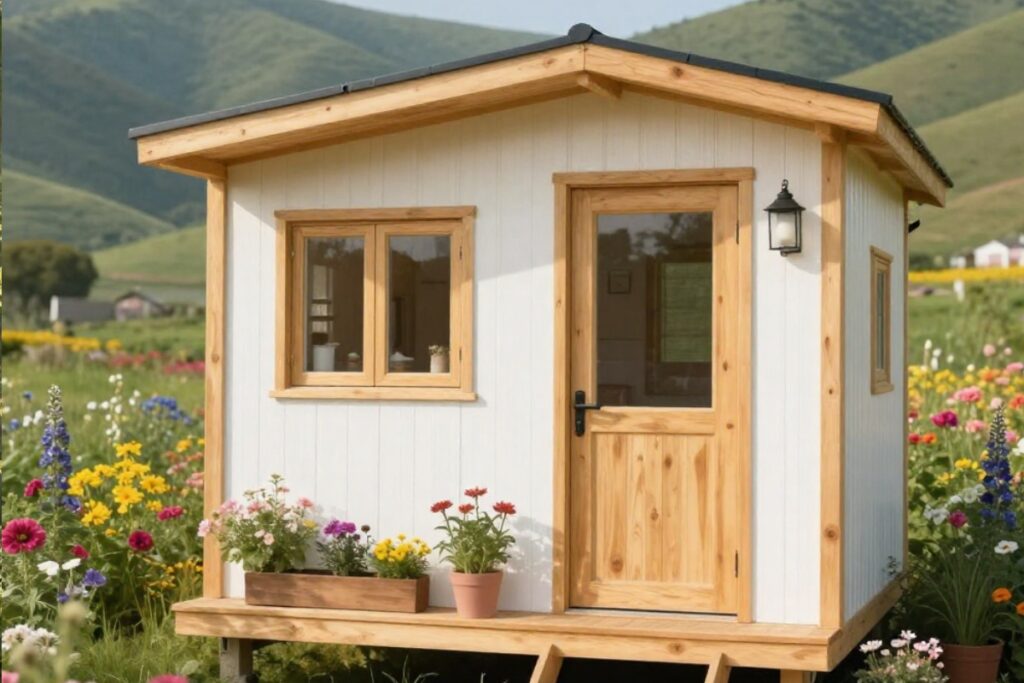
As demand for sustainable, compact, and budget-friendly living continues to rise across Colorado, tiny homes have become one of the most searched-for housing solutions in 2026. But before investing in a tiny home or ADU (Accessory Dwelling Unit), many homeowners ask a key question: Should I choose a prefab tiny home or a traditional stick-built structure?
Both options offer unique advantages, but the gap between them has widened significantly in recent years as prefab technology improves, timelines shrink, and energy-efficient construction becomes a priority. Below, we compare cost, speed, durability, sustainability, and long-term value to help you determine which option is best for your property.
A prefab tiny home is built off-site in a controlled environment, delivered to your property, and assembled with minimal disruption. This method reduces waste, improves quality control, and speeds up the entire process.
Prefab homes have evolved enormously, offering design flexibility, long-term durability, and solar-ready engineering that rivals (and often surpasses) traditional construction.
A traditional build takes place fully on-site, similar to constructing a small home or cabin. Homeowners often choose this route for complete customization, unique finishes, or complex architectural features.
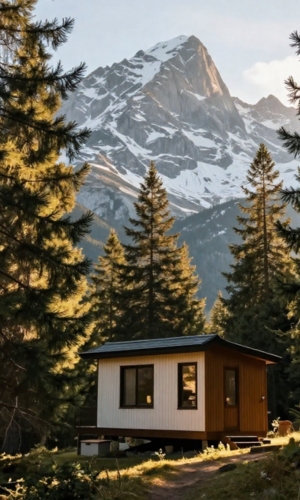
However, these benefits come with trade-offs—especially regarding cost, speed, and energy performance.
Pricing remains one of the strongest advantages of prefab.
Build Type | Estimated Cost (2026) | Why |
Prefab Tiny Home | $70,000 – $130,000 | Lower labor cost, faster build |
Traditional Build | $120,000 – $180,000 | Custom labor + material variability |
Prefab homes minimize delays and reduce wasted materials, keeping costs predictable and manageable.
In Colorado—where weather, freeze cycles, and labor shortages impact construction—build speed matters.
6–12 weeks (plus delivery + installation)
3–9 months depending on contractor availability, weather, and custom requirements.
For most homeowners, the speed of prefab is a major deciding factor—especially when the tiny home will be used for rental income or as a family living space.
Prefab tiny homes are engineered with sustainability in mind. They typically include:
Traditional builds can incorporate these features, but they often increase cost significantly.
Urban ADU’s prefab homes come solar-ready, making them ideal for Colorado’s sunny climate and long-term energy independence.
If you value affordability, predictable timelines, sustainability, and long-term durability, prefab tiny homes are the stronger choice in 2026.
If you require complete customization or luxury-level finishes, traditional building may be worth the additional cost and time.
Urban ADU offers energy-efficient, solar-ready prefab models designed specifically for Colorado’s climate and lifestyle.
Explore available homes on our Models page or use our Visualize Your ADU tool to see your design come to life.